Televised Trials of Killers
Humans are nasty creatures. We kill, rape, destroy, and do all manner of uncivilized activities. While not everyone does these acts, everyone has a little bit of morbid fascination. This is evidenced by how many of us love to learn about killers and deviants. We love to learn about how they grew up and how they did the things they did, but more importantly, we love to cheer when they are sentenced to pay for their crimes. This is evidenced by how often in our history public trials and even public executions were some of the biggest events of the day.
The Sixth Amendment gives the right to a speedy and public trial, with the intent to eliminate corruption in the judicial system and allow the public to act as a witness against the judge and jury. What the Founding Father's could not expect was the invention of photography, videography and invasive mass media. 1935 saw the first "Trial of the Century" when Bruno Hauptmann was tried for the kidnapping and murder of the Lindbergh baby. The court allowed cameras in the courtroom and was appalled by the constant flashes from the cameras and photographers vying for position to get the best shot. This was one of the main reasons that soon enough cameras and recording equipment was banned from courtrooms across America with the exception of Texas, Oklahoma, Colorado, and Kansas.
After several changes and Supreme Court cases in the 1960s and 1970s, in certain circumstances cameras were allowed in courtrooms again. One of the first nationally televised trials was the murder trial of Ted Bundy in 1979. Ted Bundy was a serial killer who kidnapped, killed, and sexually mutilated over 30 women in the 1970s. He was tried for kidnapping in Utah previous to 1979, but it was his Florida murder trial that caught the nation's attention. At Florida State University, Ted Bundy broke into the Chi Omega sorority house and brutally sexually mutilated four women, two of which were killed in the attack. It was these murders that finally brought Ted Bundy to justice.
While the brutality and severity of the murders brought the trial to the national scene, it was Ted Bundy himself that captivated the country. He was a charming and handsome young man, that had charisma and swagger. He was active in politics and even worked for a suicide hotline. He was, as the New York Times put it, an All-American Boy. America was getting used to the idea of serial killers at the time, and all the previous examples were brain-addled, madmen like Charles Manson. But Bundy had style and was suave--he even represented himself in court. America could only watch with fascination and horror as the trial unfolded and he was sentenced to death.
Now after many years and many televised trials (including Charles Ng, OJ Simpson, and Columbine), we have a phenomena known as the 24-hour news cycle. This was something that either wasn't around during some the early televised trials or started it in the case of Columbine. Probably the most recent media extravaganza from a murder case was that of Casey Anthony.
The Casey Anthony trial was what news media dream of--it had emotion, hatred, drama, and everyone had an opinion on it. The case itself was relatively simple, Casey Anthony was accused and tried for the murder of her three-year-old daughter, Caylee. There was a mountain of evidence against Casey and a lot of inconsistencies in her statements and the statements from the defense. The preliminary court dates began in 2009 and continued until 2011 when Casey Anthony was acquitted of all felony charges; however, she was still charged with four misdemeanors and had a one year sentence.
The fact that the trial took place in Florida really helped it become one of the nation's top stories for months and years. Like I mentioned previously, Florida is one of the few remaining states to allow cameras in the courtroom. With those cameras, news organizations were able to squeeze every drop of drama, inconsistencies, and opinion out of the trial. As a result--and even though Casey Anthony was found innocent of murder--she is regarded as one of the most hated people in America.
As trends continue, we will see more and more cases televised, whether that coverage is within the courtroom itself, or on the steps outside. However, there is one thing that can really change these proceedings and that is the use of cell phones and mobile devices. It is within reason that someone would be able to sneakily record trials via their mobile device and leak it to the public via social media or traditional broadcast media.
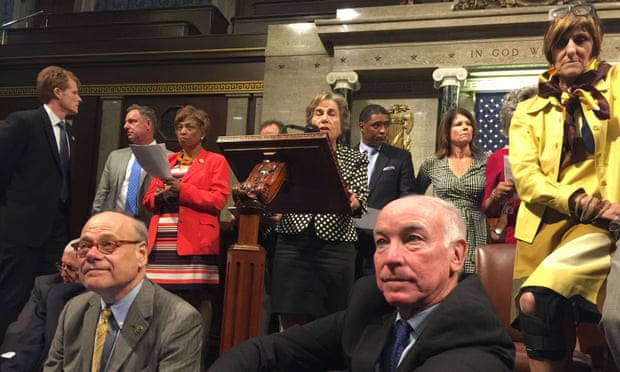
As an example of this, in June of 2016, House Democrats protested gun law and used the filibuster to extend the protest. As soon as the Republican Party realized what was happening, it ordered C-SPAN (a nonprofit broadcast company), to turn off their cameras in an effort to stop the broadcast of the protest. However, two of the protesters, Scott Peters of California and Beto O'Rourke of Texas, used the social media platforms Periscope and Facebook Live to record and broadcast the thirteen-hour affair.
While traditional recording means can be banned and regulated, the use of mobile devices to record is much harder to eliminate. The anonymity of the internet and the size of our mobile devices makes it a breeze to leak video to the press and social media. The time will come that when there is a high profile case, it will either be televised or secretly recorded through mobile devices.
The Sixth Amendment gives the right to a speedy and public trial, with the intent to eliminate corruption in the judicial system and allow the public to act as a witness against the judge and jury. What the Founding Father's could not expect was the invention of photography, videography and invasive mass media. 1935 saw the first "Trial of the Century" when Bruno Hauptmann was tried for the kidnapping and murder of the Lindbergh baby. The court allowed cameras in the courtroom and was appalled by the constant flashes from the cameras and photographers vying for position to get the best shot. This was one of the main reasons that soon enough cameras and recording equipment was banned from courtrooms across America with the exception of Texas, Oklahoma, Colorado, and Kansas.
After several changes and Supreme Court cases in the 1960s and 1970s, in certain circumstances cameras were allowed in courtrooms again. One of the first nationally televised trials was the murder trial of Ted Bundy in 1979. Ted Bundy was a serial killer who kidnapped, killed, and sexually mutilated over 30 women in the 1970s. He was tried for kidnapping in Utah previous to 1979, but it was his Florida murder trial that caught the nation's attention. At Florida State University, Ted Bundy broke into the Chi Omega sorority house and brutally sexually mutilated four women, two of which were killed in the attack. It was these murders that finally brought Ted Bundy to justice.
While the brutality and severity of the murders brought the trial to the national scene, it was Ted Bundy himself that captivated the country. He was a charming and handsome young man, that had charisma and swagger. He was active in politics and even worked for a suicide hotline. He was, as the New York Times put it, an All-American Boy. America was getting used to the idea of serial killers at the time, and all the previous examples were brain-addled, madmen like Charles Manson. But Bundy had style and was suave--he even represented himself in court. America could only watch with fascination and horror as the trial unfolded and he was sentenced to death.
Video of Ted Bundy after his sentence has been read
Now after many years and many televised trials (including Charles Ng, OJ Simpson, and Columbine), we have a phenomena known as the 24-hour news cycle. This was something that either wasn't around during some the early televised trials or started it in the case of Columbine. Probably the most recent media extravaganza from a murder case was that of Casey Anthony.
The Casey Anthony trial was what news media dream of--it had emotion, hatred, drama, and everyone had an opinion on it. The case itself was relatively simple, Casey Anthony was accused and tried for the murder of her three-year-old daughter, Caylee. There was a mountain of evidence against Casey and a lot of inconsistencies in her statements and the statements from the defense. The preliminary court dates began in 2009 and continued until 2011 when Casey Anthony was acquitted of all felony charges; however, she was still charged with four misdemeanors and had a one year sentence.
The fact that the trial took place in Florida really helped it become one of the nation's top stories for months and years. Like I mentioned previously, Florida is one of the few remaining states to allow cameras in the courtroom. With those cameras, news organizations were able to squeeze every drop of drama, inconsistencies, and opinion out of the trial. As a result--and even though Casey Anthony was found innocent of murder--she is regarded as one of the most hated people in America.
News coverage of the Casey Anthony trial
As trends continue, we will see more and more cases televised, whether that coverage is within the courtroom itself, or on the steps outside. However, there is one thing that can really change these proceedings and that is the use of cell phones and mobile devices. It is within reason that someone would be able to sneakily record trials via their mobile device and leak it to the public via social media or traditional broadcast media.
As an example of this, in June of 2016, House Democrats protested gun law and used the filibuster to extend the protest. As soon as the Republican Party realized what was happening, it ordered C-SPAN (a nonprofit broadcast company), to turn off their cameras in an effort to stop the broadcast of the protest. However, two of the protesters, Scott Peters of California and Beto O'Rourke of Texas, used the social media platforms Periscope and Facebook Live to record and broadcast the thirteen-hour affair.
While traditional recording means can be banned and regulated, the use of mobile devices to record is much harder to eliminate. The anonymity of the internet and the size of our mobile devices makes it a breeze to leak video to the press and social media. The time will come that when there is a high profile case, it will either be televised or secretly recorded through mobile devices.
A still from the House Democrat sit-in
Comments
Post a Comment