A History and Future of Podcasting
Communication is a staple of mankind. Through the ages, humans have discovered new and unique ways of communicating with each other. First, there were grunts and gestures, followed by spoken language--which, in turn, became written language--and eventually we found ways to hear and see each other via radio waves. It all leads us to this day and age, where we have the phenomena known as podcasting.
As Andy Zaltzman said in his 2014 TEDxTalk: "[Podcasting] is really the only valid art form left on Earth. By which I mean that it is largely unsullied by money." But how did it get this way? Well, like most things these days, podcasting is a digitally enhanced version of an analog system that was made feasible because of the internet.
A podcast is essentially a radio talk show that you can listen to and stream on demand--without having the constraints of time and location. The creation of podcasting is credited to Adam Curry and David Winer. Curry was a former MTV video jockey and Winer was a software developer. In 2004 they developed iPodder, a program that allowed them to download internet radio broadcasts to their iPods.

As Andy Zaltzman said in his 2014 TEDxTalk: "[Podcasting] is really the only valid art form left on Earth. By which I mean that it is largely unsullied by money." But how did it get this way? Well, like most things these days, podcasting is a digitally enhanced version of an analog system that was made feasible because of the internet.
A podcast is essentially a radio talk show that you can listen to and stream on demand--without having the constraints of time and location. The creation of podcasting is credited to Adam Curry and David Winer. Curry was a former MTV video jockey and Winer was a software developer. In 2004 they developed iPodder, a program that allowed them to download internet radio broadcasts to their iPods.
David Winer (left) and Adam Curry (right)
Since 2004, podcasting has grown immensely. It is projected that there are over 525,000 active podcasts with 18.5 million episodes among them. But out of all of these podcasts, which there are many, many great ones, I would like to talk about my favorite podcast: The Last Podcast on the Left (LOPTL). LOPTL is a dark comedy podcast that talks about serial killers, the occult, aliens, and other paranormal and supernatural things. Each episode is heavily researched and the hosts are extremely funny--but more importantly, their story is the 'quintessential' podcasting story.
The hosts, Ben Kissel, Marcus Parks, and Henry Zebrowski, are longtime friends that share a love of horror and all things weird. Back in 2011, they decided to make a podcast about horror movies. While the first two episodes were just Ben Kissel and Marcus Parks, Henry Zebrowski came along in the third episode.
It wasn't long before their fanbase grew and they started getting small amounts of advertising money. The advertising money was not enough to use as their sole income. Their podcast was really mostly a hobby, as each of the three had full-time jobs as well. Ben Kissel was a news producer for Fox and a dog walker, Henry Zebrowski was/is an actor taking numerous smaller comedic roles, and Marcus Parks was a radioman. During this time they did several other shows and had their own network called Cave Comedy Radio.
Eventually, the hosts followed in the footsteps of many internet celebrities and started a Patreon page. Patreon is a subscription pledge service that allows internet content creators to be paid directly by fans who love their work. When the Patreon page was announced, Ben, Marcus, and Henry were a little trepidatious and didn't think many people would be willing to pay them. The fanbase responded further than their wildest dreams. The trio was able to quit their day jobs and make podcasting their priority and began touring the country, eventually renaming their network to The Last Podcast Network.
The story of The Last Podcast on the Left is similar to many of the popular podcasts today, in that what began as a hobby project, evolved into a primary source of making money. This is largely due to the influx of advertising money and Patreon like services, as well as merch and touring. The biggest difference in today's podcasts is the money the podcasters are able to make.
LPOTL Patreon Announcement Video
Money and corporate sponsorship are probably the biggest changes in podcasting and it is a trend that will continue to rise. While some of the biggest and most well-known podcasts such as Serial and This American Life, make quite a bit of money, it isn't always enough to cover all their costs. Ira Glass, the host of This American Life, Sat down with Alec Balwin on his podcast and said that he (Glass) doesn't support himself entirely from his podcast and that he supplements his income through touring and speaking events.
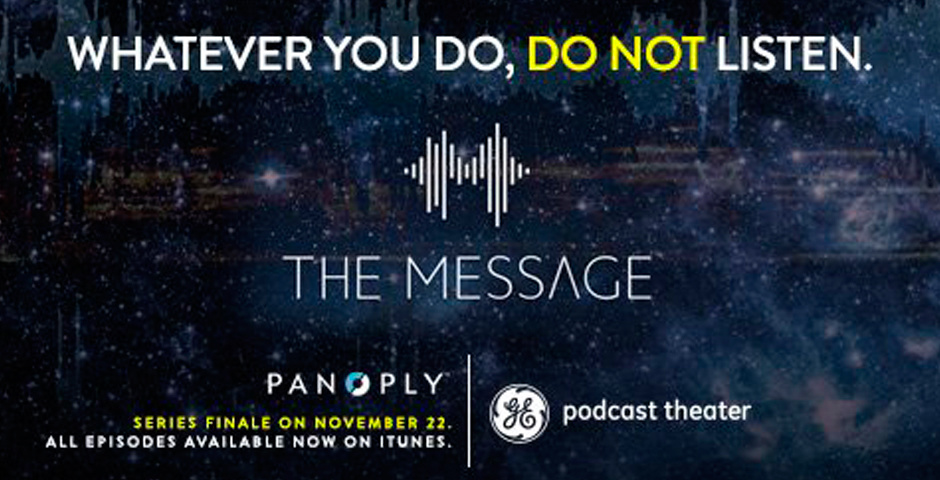
Corporations are also dipping their toes into podcasting. Some of the most successful branded podcasts are The Message (General Electric), #LIPSTORIES (Sephora), and RISE AND GRIND with Draymond Green (ZipRecruiter). While podcasts like #LIPSTORIES and RISE AND GRIND with Draymond Green are non-fiction and deal with their respective field, there are other shows like The Message which is more of a science fiction radio play.
Corporate sponsorship and production of podcasts will be the wave of the future. While traditionally produced podcasts will still be able to make money and have their voice heard, corporately branded podcasts will have production value that most of the homemade shows don't. Government regulation may come in the future, and it may not. The bigger issue is how podcasting handles 'being sullied by money.'
Ad for the GE produced 'TheMessage' podcast
Comments
Post a Comment